

Corporate print
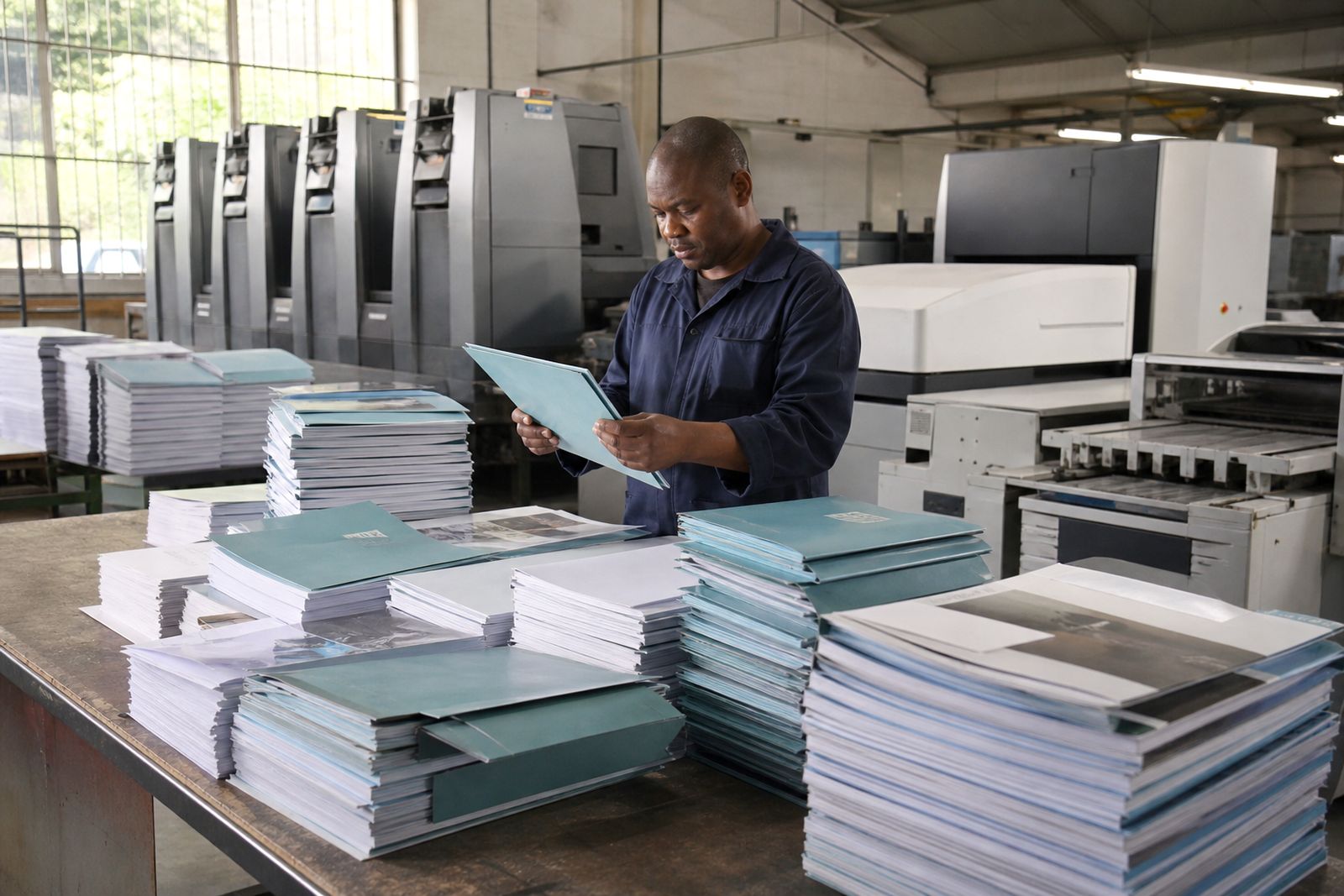
Corporate print covers the everyday printed material companies use to brief staff, present to clients, and keep their brand consistent across offices and branches. From folders and presentation packs to inserts, forms and information sheets, we print business material that needs neat colour, tidy finishing and dependable turnaround.
What We Print for Corporate Use
Corporate print is usually ordered on a repeat basis, so consistency matters more than novelty. We produce the printed items that support sales meetings, internal communication, tender submissions, training, reception areas and client handovers. That can include a simple one-page insert, or a full presentation pack with covers, tabs and folded sections.
Most jobs in this category are better suited to sheetfed litho when quantities are moderate and colour needs to stay steady from start to finish. For smaller top-up quantities, a digital run may also be suitable, especially where teams need a few extra packs quickly. We will guide the method according to quantity, paper, deadline and the look you need.
- Company profiles and capability brochures
- Presentation folders with loose inserts
- Product information sheets and price lists
- Internal training manuals and policy booklets
- Forms, pads, NCR sets and controlled documents
- Corporate stationery items such as letterheads and continuation sheets
- Board packs, briefing notes and conference handouts
Typical Formats, Paper and Finishes
Most corporate print jobs are supplied in familiar business sizes so they file neatly and work with standard envelopes, folders and shelves. A4 is the most common for reports, inserts and manuals. A5 works well for smaller handouts, while DL is often used for compact leave-behinds. For presentation folders, capacity, spine width and pocket style need to be decided early so the finished pack holds the required pages without bulging.
Paper choice affects both appearance and handling. Uncoated stocks are often chosen for forms, letterheads and pages that need writing on. Gloss or silk coated stocks suit full-colour profile pieces and product sheets. Covers may be heavier than inners for durability, and laminating can be added where folders or covers will see regular use. In Durban and across KwaZulu-Natal, coastal humidity can affect flatness on some heavier sheets, so we plan packing and finishing accordingly.
- Common flat sizes: A4, A5, DL and custom sizes on request
- Typical text weights: 100gsm to 170gsm
- Typical cover weights: 200gsm to 350gsm
- Printing options: full colour both sides, black only, or mixed combinations
- Finishes: matt or gloss lamination, folding, scoring, drilling, numbering and perforation
- Binding options where needed: saddle stitching, PUR or perfect binding, wire binding
How the Process Works
We keep the process straightforward so buyers can order repeat work without having to start from scratch each time. Once your enquiry comes in through the website form, we confirm the basic specification, quantity, delivery point and timing. If the job is a reprint, send the previous specification where possible as that helps avoid small changes creeping in.
After checking files and print requirements, we issue a quotation request response with the available production route. For work that needs exact page order, fold direction, tab sequence or variable inserts, we may ask for a dummy or packing plan. Proofing follows before production, then printing, finishing and packing. Final goods are bundled and labelled to match the delivery or distribution need.
- Enquiry received through the contact or quote form
- Specification checked for size, pages, stock, colours and finish
- Files reviewed for bleed, image quality, fonts and page order
- Proof supplied for approval where required
- Press production scheduled to suit the run length
- Finishing completed, then packed by set, box or branch split
- Delivery arranged in Durban or elsewhere in KwaZulu-Natal
What You Need to Prepare
Clear source files save time and reduce avoidable corrections. Supply press-ready PDF files at the final trim size with bleed included where images or colour run to the edge. If the job contains multiple versions, name files clearly and include a schedule showing which pages or inserts belong to each pack. Corporate jobs often carry legal, financial or policy wording, so final sign-off should come from the correct internal approver before printing starts.
For branded material, keep logos, colour references and previous printed samples together. If a piece must match an existing item closely, mention that at the start. This is especially useful for stationery sets and repeat information sheets. If you need guidance on black backgrounds, rich colour builds or proof checks, the guides section on our site covers the basics in plain language.
- Press-ready PDF with 3mm bleed where needed
- Crop marks only if requested
- Images supplied at suitable print resolution
- Fonts embedded or outlined
- Final page order confirmed
- Delivery notes for split quantities or branch packing
How Pricing Is Worked Out
Corporate print pricing is mainly driven by specification and quantity. The biggest factors are final size, page count, number of colours, paper choice, finishing steps and how the job is packed. Litho becomes more economical as quantities rise because the setup is spread across more copies. Shorter runs may suit digital production if the format allows, especially when speed matters.
Extra handling also affects the quote. That includes tab collating, inserting packs into folders, versioning by region, numbering, perforation or delivering split consignments to different sites. If the stock is unusual or the format is large, that can also change the production route. For accurate pricing, send the full specification through the quotation request page and we will advise the most practical option. ask for a quote rather than guessing from an old job that looked similar.
Aftercare, Reprints and Stock Consistency
Once a job is delivered, good record keeping makes the next order easier. Keep one flat sample of each item, note the paper and finish used, and store remaining packs in a dry indoor space away from direct heat. In coastal areas this helps reduce curl and cover scuffing, especially on laminated items. If forms or manuals are used in high volumes, reorder before stocks run too low so there is enough time for proofing and production.
For recurring corporate material, we can work from a standing specification so repeat orders stay aligned. That is useful for branch stationery, induction packs, policy booklets and monthly client handouts. If content changes often, tell us which pages are fixed and which are revised regularly. That small bit of planning usually saves money and avoids last minute errors.
What our Commercial Printing customers say
Verified Google reviews
Questions we get asked
Can you match an existing corporate item?
Yes, if you send a current printed sample and the previous specification. A close match is easier when we know the paper, finish, size and colour expectation from the start.
Is litho or digital better for corporate print?
It depends on the quantity, turnaround and format. Litho usually suits medium runs and repeat colour consistency, while digital works well for shorter quantities and quick top-ups.
Can you pack orders for different branches or departments?
Yes. Provide a clear packing schedule with quantities per branch, office or team, and we can prepare labelled splits as part of the finishing and dispatch process.
Also worth a look
Ask for a quote
Send a note through the contact form with your print job, quantity, size, finish and delivery area, and the team will reply with a quote.
Open the contact form