

Finishing
Good finishing turns printed sheets into work that is easy to read, easy to handle and presentable in front of clients or shareholders. At Colour Planet in Durban, we help business buyers and agencies match the right binding, cover finish and proofing route to the job.
What Finishing Covers
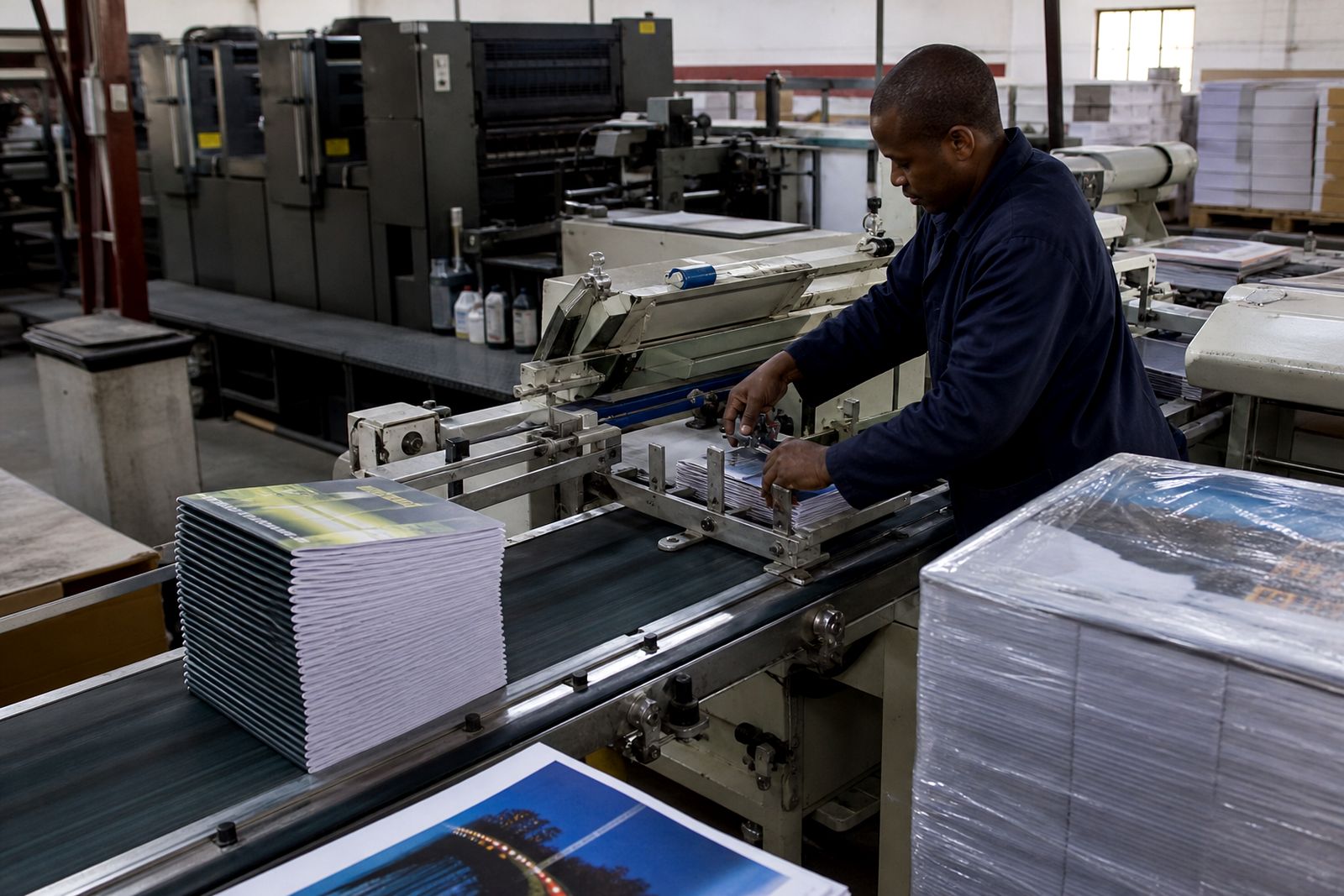
Finishing is everything that happens after printing to prepare the job for use, mailing, handout packs or boardroom circulation. That includes folding, trimming, collating, binding, cover treatment and proof checks before the full run goes ahead.
For business print, finishing affects more than appearance. It changes how a magazine opens, how a brochure holds up in transit, and how an annual report feels in the hand. A well-finished piece gives cleaner stacking, neater edges and more consistent presentation across the full run.
We handle finishing for litho and digital work from our Durban base, with practical guidance for companies across KwaZulu-Natal. If you are unsure what will suit your quantity or page count, send the job details through the website enquiry form and we will point you in the right direction.
Choosing the Right Binding
Binding should suit the size of the document, the number of pages and how often it will be used. A sales brochure handed out once has different needs from a training manual or a shareholder report that will be filed and referred to later.
- Saddle-stitched: best for slimmer magazines, brochures and booklets. It is economical and opens fairly flat.
- Perfect bound: suits thicker publications where a square spine gives a more formal shelf finish.
- Section sewn or reinforced options: useful where a publication needs extra strength for repeated handling.
- Loose collated sets: practical for forms, inserts or packs that will go into folders.
As a simple guide, lower page counts usually favour stitched booklets, while thicker reports and catalogues often benefit from a square spine. Paper choice also matters. Heavier stocks can affect bulk, fold accuracy and the finished spine, so it helps to decide paper and binding together not one after the other.
Cover Finishes and Surface Protection
The cover does a lot of the hard work. It takes scuffing during delivery, repeated handling at reception areas and humidity changes common along the coast. A suitable finish can improve appearance while also helping with durability.
- Gloss finish: gives stronger shine and punch on colourful images.
- Matt finish: softer look with less glare, often chosen for corporate reports and presentation pieces.
- Protective coating: helps reduce marking on covers and can improve handling on darker colours.
- Uncoated cover: useful where a more natural writing surface is needed for notes or stamps.
If a job includes large dark solids, heavy handling or courier delivery, it is worth discussing cover protection early. Some finishes look excellent but can show rubbing more quickly on certain colours, so a short conversation before print can prevent disappointment later.
Proofing Before the Full Run
Proofing keeps avoidable errors out of the job before paper, ink and finishing time are committed. It is also the best stage to confirm pagination, image position, trim allowance and whether key colours are moving in the right direction.
For many everyday items, a digital proof is enough to confirm content and layout. For more sensitive work such as annual reports, corporate brochures or image-heavy publications, a tighter proofing process is usually worth it. This is especially true where brand colours, fine tints or black backgrounds must print cleanly.
When reviewing proofs, check spelling, version control, page order, crop marks and any pages carrying bleeds. It sounds basic but final sign-off delays often come from mixed file versions or a late text change on one page only, and that can hold the whole job back.
A Practical Comparison of Finishing Choices
If you need to decide quickly, use this simple comparison as a starting point.
- Magazines and promotional booklets: usually work well with saddle-stitching and a gloss or matt cover finish.
- Annual reports and thicker catalogues: often suit perfect binding, stronger cover stock and careful proof approval.
- Leaflets and inserts: generally need accurate folding and trimming more than binding.
- Corporate packs: may need collated sets, cover protection and consistent trim for neat insertion into folders.
Shorter digital runs are useful when quantities are lower or content changes often. Medium-run litho work is often the better fit where colour consistency across a longer run matters most. The finishing choice should follow the purpose of the printed piece, not just the page count.
Planning Finishing Into Your Schedule
Finishing is part of production time, not an extra added at the end. Folding, binding, drying time for certain cover treatments and final packing all need to be allowed for when you set a delivery date. If your print is tied to an event, internal launch or board meeting, mention that timing upfront.
It also helps to tell us how the printed work will be distributed. Jobs going to several KwaZulu-Natal branches may need packing in smaller bundles. Jobs for hand delivery in Durban may need a different packing approach. These details are ordinary production matters, but they make a real difference on the day.
For guidance on files, proofs and finishing options, use the links in our client tools and print guides sections. When you are ready, send your enquiry through the contact page form and include the size, page count, quantity and deadline if known.
Explore the range
Bindery
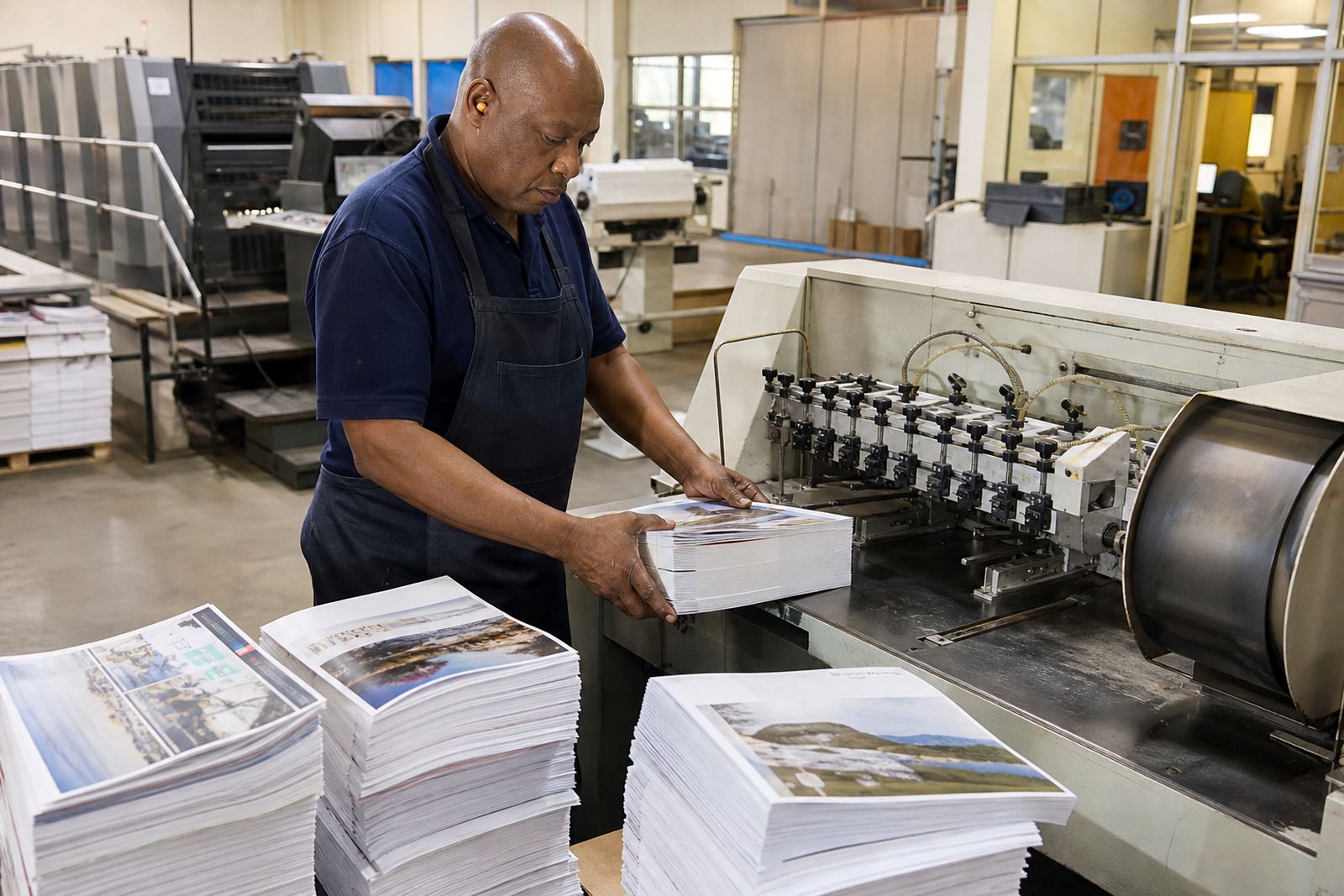
Neat folding, stitching and trimming for commercial print that must arrive finished and ready to use.
Read more
Proofing and workflow
Prepress checks and proofing support to keep colour, layout and production on track.
Read more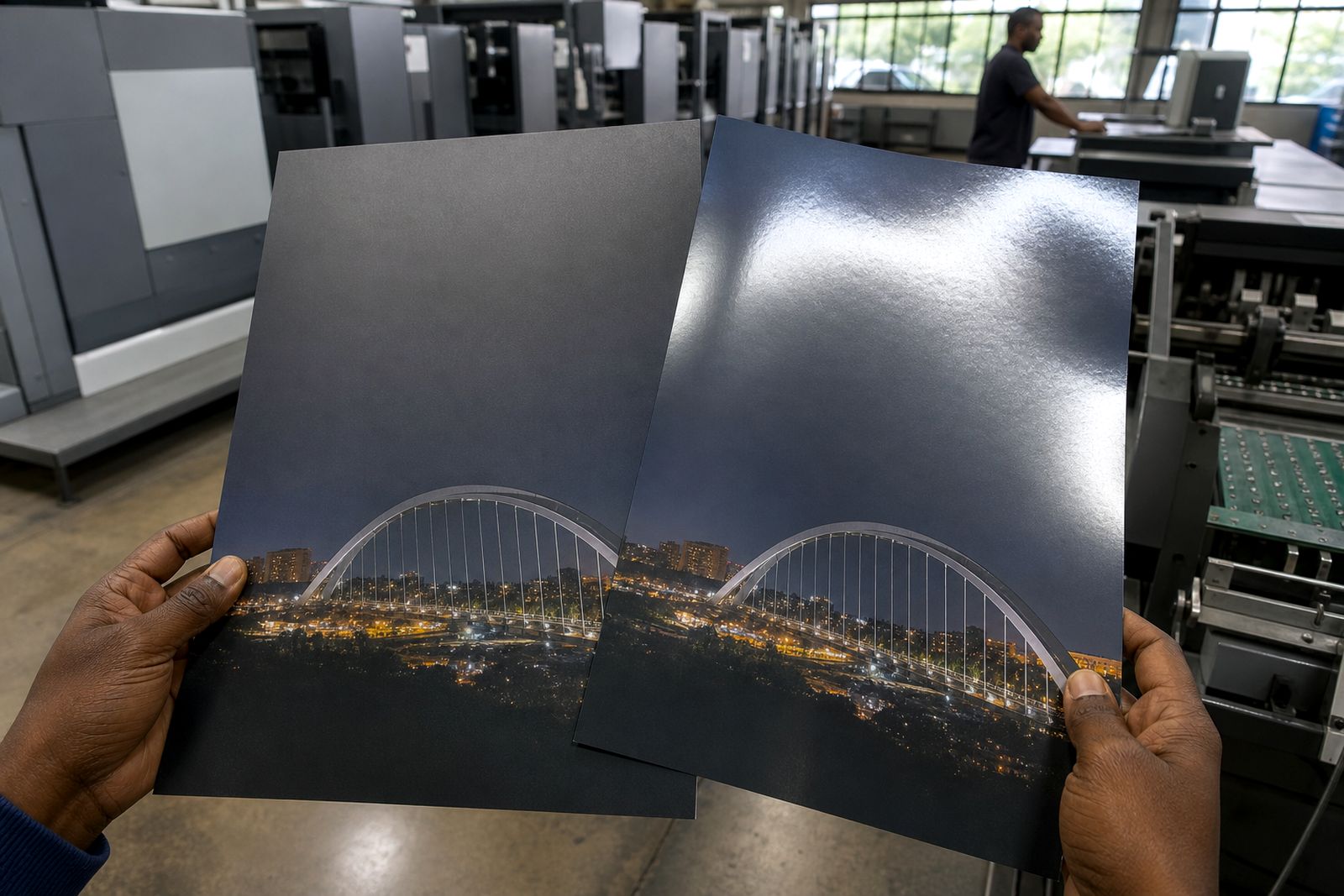
Cover finishes
Protect and improve printed covers with practical finish options for business print and publication work.
Read moreWhat our Commercial Printing customers say
Verified Google reviews
Questions we get asked
How do I know whether to choose saddle-stitching or perfect binding?
It usually comes down to page count, paper bulk and how formal the publication needs to look. Saddle-stitched work suits slimmer booklets, while thicker reports and catalogues often suit a square spine.
Do I need a special cover finish for business print?
Not always, but it can help. A gloss, matt or protective coating may improve handling and reduce scuffing, especially on covers that will be couriered, displayed or used often.
Can you help us check files before printing?
Yes. We provide proofing and workflow support so you can check page order, trim, bleeds, image placement and general print readiness before the full run proceeds.
Ask for a quote
Send a note through the contact form with your print job, quantity, size, finish and delivery area, and the team will reply with a quote.
Open the contact form