

Bindery
Good printing still needs accurate finishing before it is ready to hand out, post or place on a shelf. Our bindery service in Pinetown, Durban covers the folding, stitching and trimming that turns flat printed sheets into clean finished work.
What Our Bindery Service Includes
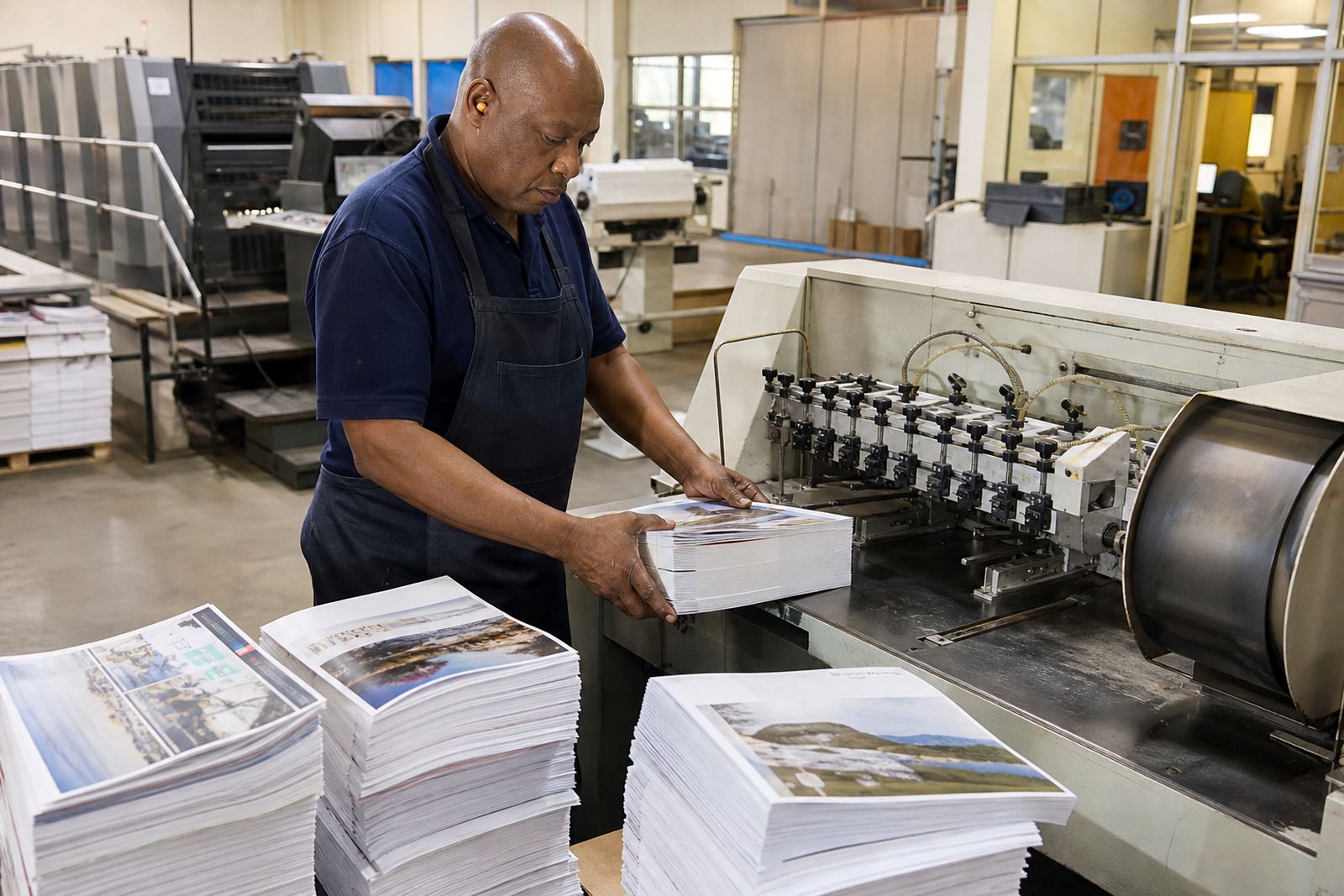
Bindery is the finishing stage after printing, where loose sheets are folded into sections, stitched where needed, and trimmed to final size. For business buyers and publishers this is the step that affects how a brochure opens, how a magazine sits in the hand, and whether a stack of leaflets looks square and consistent.
We handle bindery for litho and digital work produced for companies across Durban and KwaZulu-Natal. Typical jobs include magazines, brochures, annual reports, booklets, corporate profiles, newsletters, inserts and general marketing print. If a job needs a simple fold only, saddle stitching, or a final trim to a supplied size we can advise on the most practical route.
- Half fold, letter fold, roll fold and gate fold options
- Saddle stitched booklets for shorter publications
- Face trimming and head and tail trimming to final size
- Collating of multi-page sets before stitching
- Finishing checks for page order, fold accuracy and trim position
- Packing suitable for internal distribution, events or delivery
How The Process Works Step By Step
We start by checking the job specification against the artwork and the printed sheets. This includes final size, page count, paper stock, grain direction where relevant, fold style and whether the piece must stitch through the spine. Small setup choices at this stage help avoid cracking on heavy covers or pages pushing out after trimming.
Printed sheets are then prepared for folding. Multi-page work is folded into sections in the correct sequence, while single-sheet items such as leaflets are folded to the required panel layout. After folding, sections are gathered and checked again before stitching or trimming proceeds.
For saddle stitched work, pages are nested, stitched through the fold line, then trimmed on three sides. On simple folded items, the folded piece may only need a clean final trim. Each stage is checked for square edges, correct pagination and a tidy finish. If we spot something likely to affect the finished result, we stop and query it before teh full run is completed.
- Specification check and file-to-print review
- Sheet preparation and folding setup
- Section gathering or collating
- Stitching where required
- Final trimming to finished size
- Packing and dispatch preparation
What Clients Need To Prepare
Good bindery starts with a file that has been set up with finishing in mind. Clients should supply the correct final size, page count and fold plan at quotation stage, especially for brochures, newsletters and annual reports. If a booklet self-covers on one stock, or uses a heavier cover with lighter text pages, that must be noted early because it affects imposition and finishing method.
Please make sure artwork includes bleed where images or colour run to the edge, and keep text well inside trim and fold lines. For stitched work, page order must be supplied as reading pages rather than printer spreads unless we have agreed otherwise. If you are not sure about panel widths on a roll fold or where to place a crossover image we can guide you before print goes ahead, saving a reprint later.
- Confirm final trimmed size in millimetres
- State the exact fold type required
- Confirm page count including covers
- Add bleed, crop marks and safe margins where needed
- Flag any solid dark areas near folds on heavier stock
- Use the website form to send job notes and upload files
Common Sizes And Practical Specifications
Most commercial bindery work follows standard finished sizes because they pack, post and display more easily. A4 brochures and reports, A5 booklets, DL leaflets and A6 postcards are all common, but custom sizes can also be planned if the layout and paper stock suit the job. Heavier covers generally finish better with a proper score before folding, while lighter text stocks can fold cleanly without it depending on the design.
Page extent matters. Saddle stitching suits shorter publications well, while larger page counts may need a different binding method. Trimming allowance also matters because pages in a stitched booklet creep outward as sections nest inside each other. We allow for this during setup so the final book trims cleanly and reads properly. In Durban's coastal humidity paper can move slightly, so stable packing and sensible storage after delivery are worth it.
- Typical finished sizes: A4, A5, A6 and DL
- Standard bleed allowance: 3 mm on trimmed edges
- Recommended quiet margin: at least 5 mm from trim, more for stitched work
- Typical saddle stitched extent: small to medium page counts
- Heavier covers may need scoring before folding
- Final cartons should stay dry and flat before use
How Bindery Pricing Is Worked Out
Bindery cost is usually based on the type of finishing, the number of finished pieces, the number of folds, the page count, the paper stock and the amount of setup needed. A single half-fold leaflet is straightforward. A stitched booklet with multiple sections, cover stock changes and close trim tolerances needs more handling and more checks.
Run length also affects value. Medium runs often suit litho printing with finishing added after press, while very short runs may go digital and then into the same bindery flow. Packing requirements, split deliveries and handwork can also change the quotation. We do not publish prices on the site, so the best route is to send the job details through the quotation request form and we will advise on the most sensible finish for the budget.
Aftercare, Packing And Storage
Once finished print leaves the bindery, handling still matters. Keep cartons dry, level and away from direct heat. In coastal areas around Durban and the wider KwaZulu-Natal region, humidity can soften paper slightly over time, especially on unwrapped stock, so it is best to leave work packed until it is needed. If you are distributing by branch, event or sales team, tell us beforehand so cartons can be labelled clearly.
For stitched booklets, avoid forcing them flat straight out of the carton. For folded leaflets, do not stack them where pressure can crush the fold edge. If a job must go into storage during power cuts at your premises, choose a clean indoor area away from damp floors and open windows. A little care here keeps the final piece looking neat right to the point of use.
What our Commercial Printing customers say
Verified Google reviews
Questions we get asked
Can you help if I am not sure which fold to choose?
Yes. Tell us the finished size, number of panels and how the piece will be used, and we can suggest a practical fold option.
Do stitched booklets need special artwork setup?
They do. Page count, bleed, safe margins and page order all matter, especially once trimming and page creep are considered.
Can I request bindery only for work printed elsewhere?
In some cases, yes. Send the job details through the contact form so we can confirm suitability, handling requirements and timing.

Ask for a quote
Send a note through the contact form with your print job, quantity, size, finish and delivery area, and the team will reply with a quote.
Open the contact form