

Proofing and workflow
Good print starts before the sheets reach press. Our proofing and workflow service checks colour, layout and production flow so your job moves through prepress, printing and finishing with fewer hold-ups.

What is included in proofing and workflow
This service covers the prepress work that sits between your finished artwork and the print run. We review supplied files, check that page sizes and bleeds are set correctly, confirm colour build where needed, and make sure the job can move cleanly into litho or digital production. For magazines, brochures, annual reports and corporate packs, this stage helps avoid preventable problems such as missing fonts, low-resolution images, shifted trims or black text built from four colours.
We also plan the production route. That means looking at page count, stock choice, binding method, cover finish and delivery deadline to decide the best order of work. If a job needs folding, stitching, perfect binding or lamination, those steps are built into the workflow from the start so there are fewer surprises later. This is especially useful for Durban and wider KwaZulu-Natal clients sending work from different offices or agencies where files can arrive in stages.
- File checks for size, bleed, trim and safe areas
- Colour review for CMYK setup, black builds and image consistency
- Preflight for fonts, linked images and transparency issues
- Proof supply for content and production approval
- Workflow planning for print method, finishing and delivery order
How the process works step by step
Once your files are sent through the website form route, the job enters prepress review. We first confirm the basic brief: quantity, finished size, number of pages, stock, colour requirement, and the intended finish. If anything is unclear, we flag it before plating or digital output is booked.
Next comes file preflight. We check the document against practical production rules such as bleed, image resolution, page order and colour space. If corrections are simple and clearly agreed, they can be handled at prepress stage. If changes affect content or layout, updated files will be requested from the client. After that a proof is issued for checking. Depending on the job, this may be a digital soft proof or a harder production check for colour-critical work.
Once approval is received, the job is released into production and tracked through print and finishing. Our workflow aims to keep approvals, revisions and output in the right sequence so one stage does not delay the next. Where timing is tight, we can advise which approval points are essential and which can be streamlined, but we do not skip critical sign-off on live work.
- Brief confirmation and job setup
- Preflight and production suitability checks
- Client queries and file correction where required
- Proof issue and approval
- Release to print, finishing and final dispatch planning
What you should prepare before sending files
The smoothest jobs are the ones supplied with a clear brief and press-ready PDFs. If your team is sending multiple items, such as a set of brochures plus matching inserts, label each file plainly and note the final trimmed size. For annual reports and magazines, page order must be final before approval. Late page swaps can affect imposition and finishing, and that can slow the whole run.
To help us move quickly, prepare artwork with the correct bleed, keep important text away from the trim edge, and convert colours to the intended print process. Small black text should normally be 100% black only, not a four-colour mix. Images for print should usually be supplied at 300 dpi at final size. Spot varnish, special cover finishes and fold panels must be clearly marked. If your office has been affected by power cuts and files were exported in a rush, it is worth doing one last check before upload.
- PDF files exported for print, preferably as single pages unless advised otherwise
- 3 mm bleed on all outer edges
- Minimum image resolution of 300 dpi at final size
- Fonts embedded or converted where appropriate
- Clear note of quantity, stock preference and finish required
- Final approval contact listed in the brief
Proofing choices and colour checks
Different jobs need different proofing levels. A short-run leaflet may only need a straightforward content and layout check, while a magazine cover or annual report with heavy brand colour use may need closer colour review before it goes on press. We explain the proof type in simple terms so your buyer, agency or studio knows exactly what is being approved.
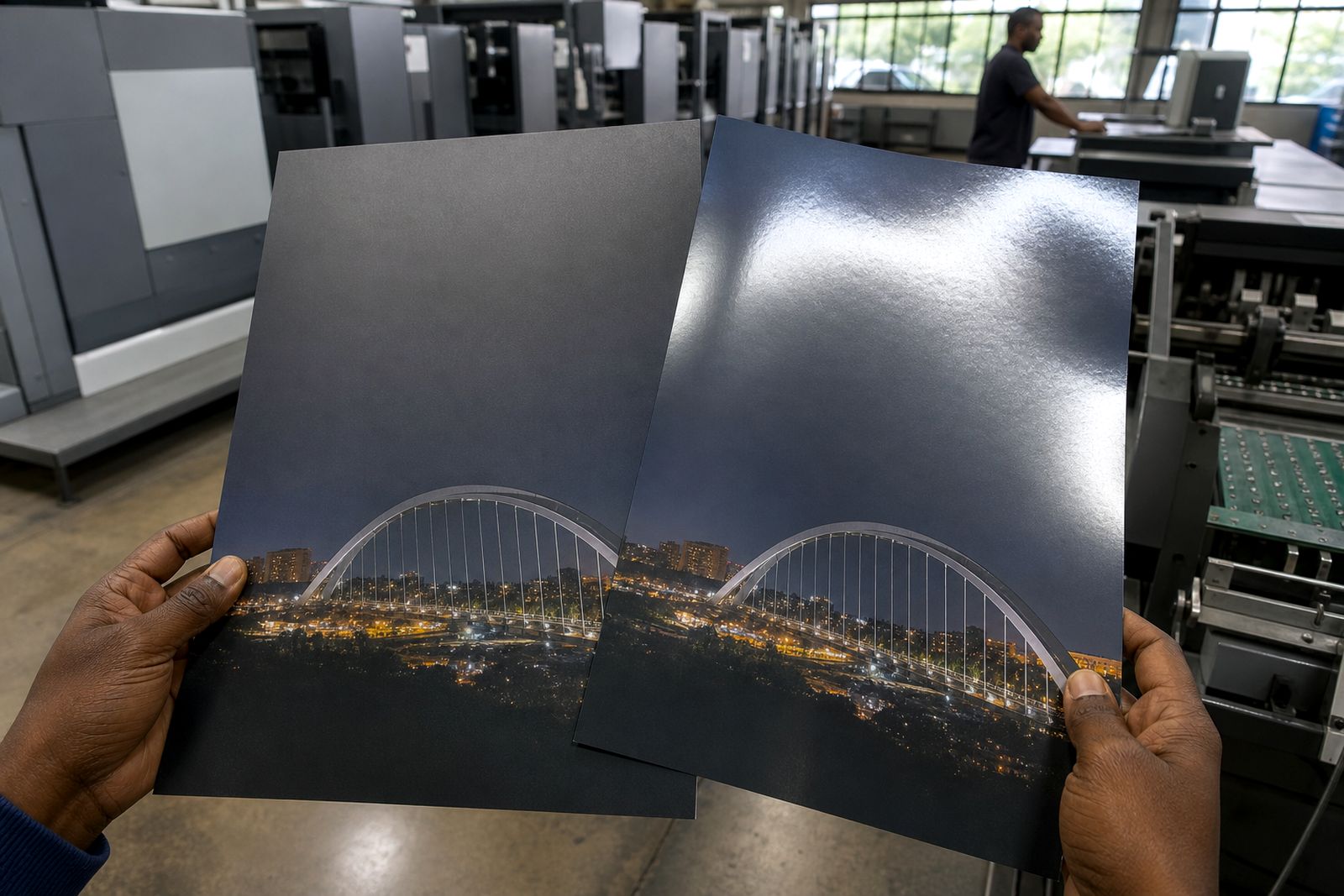
Soft proofs are useful for checking copy, page sequence, image placement and general layout. They are fast and practical, especially when several decision-makers need to review the same job. For more colour-sensitive work, we can guide you on the most suitable approval route. Keep in mind that screen viewing can vary from device to device, and office printers do not reliably represent final press colour. If you have a critical corporate shade or a dark background, flag it early. That saves time later and avoids the common issue of a black area printing too flat or too warm.
We also check for production details that affect the look of the finished piece, such as cracking risk on heavy cover stocks, lamination over solid colour, and show-through on lighter text papers. In coastal humidity around Durban, paper handling can matter more than clients expect, so stock and finish should be agreed before final proof sign-off.
How pricing is worked out
Proofing and workflow costs depend on the amount of prepress handling a job needs. A clean, press-ready flyer with one PDF and no changes takes less time than a multi-section annual report with repeated revisions, complex pagination and several approval rounds. The chosen print method also matters because litho and digital jobs move through different production paths.
In general, pricing is influenced by the following:
- Number of pages or separate items in the job
- Condition of supplied files and whether corrections are needed
- Number of proof rounds and revisions
- Colour-critical requirements or special finish planning
- Binding, folding, lamination or other finishing steps that need setup checks
- Turnaround time and whether work must be prioritised
We do not publish set prices on the site because each job is different. Use the quotation request form with your basic specs and files where possible, and we will advise on the most practical route before production starts.
Aftercare and support once the job is approved
Our involvement does not stop the moment the proof is signed off. We continue to track the job through production and finishing, checking that the approved version is the one released to print. If a last-minute issue appears, such as a missing page note or a mismatch between the brief and the uploaded file, we raise it before the job is completed.
After delivery, many clients keep a record of the approved specs for repeat work such as stationery, brochures or regular corporate updates. We can help by noting the key production settings used on the job so repeat orders are easier to brief next time. For clients using the web-to-print route, consistent file naming and standardised templates can reduce errors and speed up future orders. It's a simple thing but it saves time.
If you are not sure whether your artwork is ready, send the files through the website contact form with a short note on quantity, size and deadline. We will review what you have and point out any issues before the job reaches press.
What our Commercial Printing customers say
Verified Google reviews
Questions we get asked
Can you fix artwork problems before printing?
We can handle straightforward prepress corrections such as bleed setup or minor file issues where the change is clear. If the content or layout needs reworking, we will ask you to supply updated artwork for approval.
Do I always need a colour proof?
Not every job needs the same level of proofing. Simple digital work may only need a content check, while colour-sensitive covers, reports or brand-heavy items may need closer colour review before print.
What happens if I approve a proof and then want changes?
Once approval is given, the job may already be booked into production. Changes after approval can affect timing and cost, so send any revisions as soon as possible through the contact form.
Ask for a quote
Send a note through the contact form with your print job, quantity, size, finish and delivery area, and the team will reply with a quote.
Open the contact form