

Finishing options
Good finishing does more than make print look smart. It affects how pages turn, how covers wear, how pieces mail and how your final job feels in the reader's hands.
Start with the job's purpose
Before choosing any finish, decide what the printed piece must do. A sales brochure handed out by a rep has different needs to an annual report, a magazine insert or a stack of leaflets at reception. Finishing should suit the way the item is used, stored and moved around, not just how it looks under office lights.
Ask a few simple questions first. Will the item be posted, carried in a bag, filed in a cabinet, stacked at an event, or read many times over several weeks? Is it a short promotion or a document that represents the company for months? In Durban and across KwaZulu-Natal, humidity can also affect how paper behaves, so the right finish helps a job stay neat after transport and handling.
- Choose protection first for covers and heavily handled pieces.
- Choose readability first for reports, manuals and text-heavy documents.
- Choose postal practicality first for folded items and self-mailers.
- Choose speed first when turnaround matters more than extra cover treatment.
Varnish or laminate for cover protection
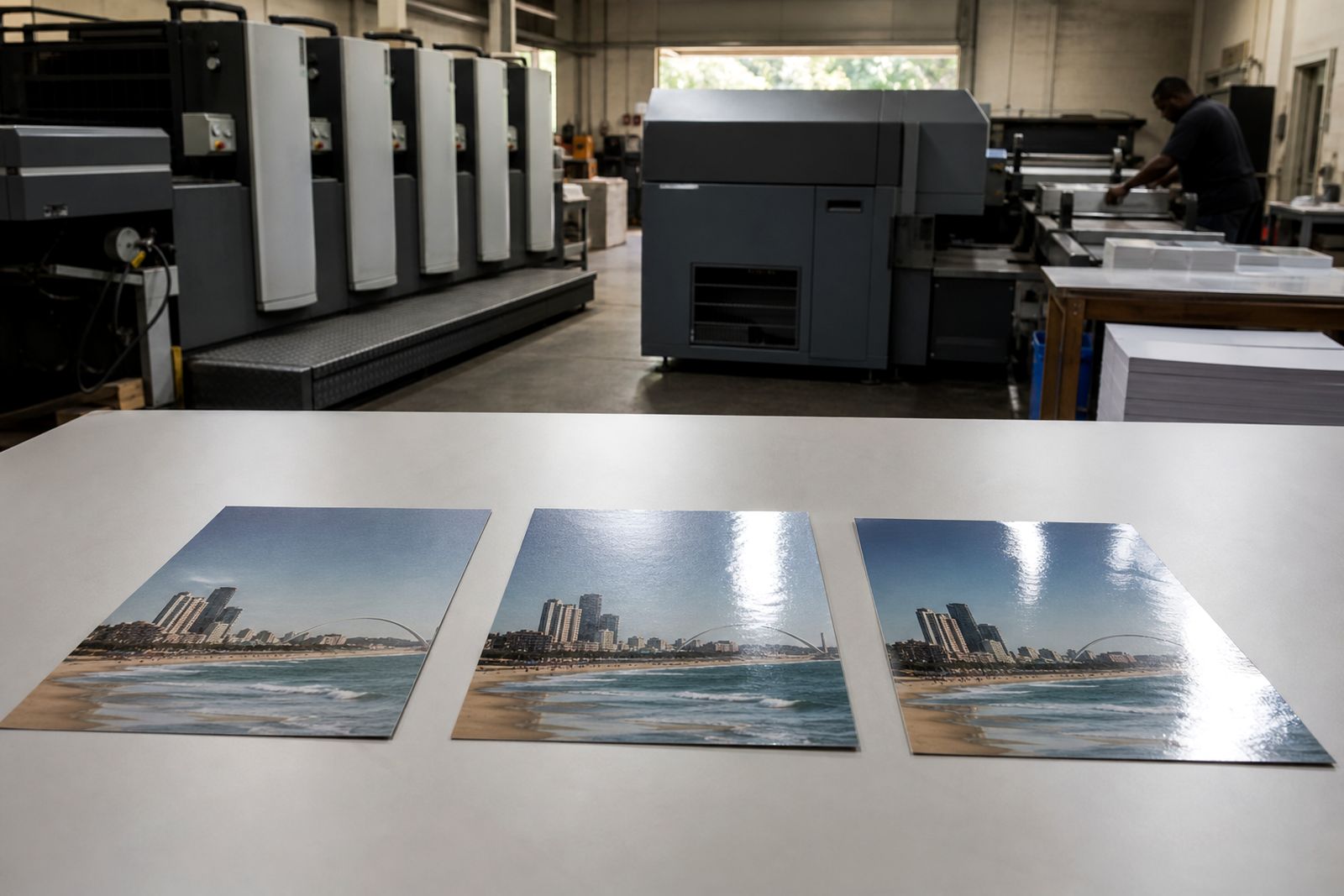
Varnish and laminate both improve a cover, but they do different jobs. Varnish is a coating applied to the sheet. It can add a more polished appearance and a light layer of protection while keeping the job relatively straightforward. Laminate is a film applied over the printed surface. It gives stronger scuff resistance and is often the better choice for covers that will be handled often.
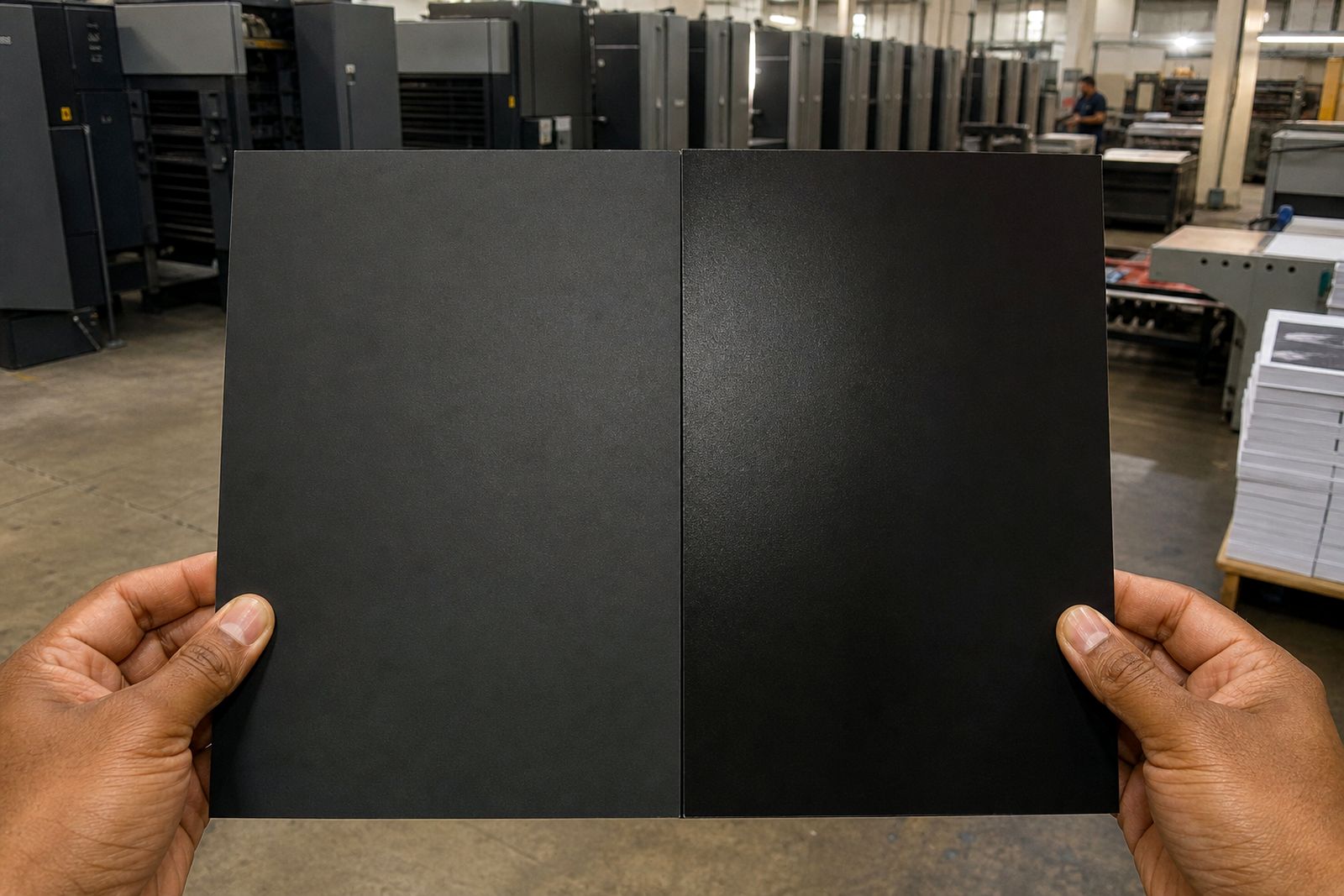
If you are printing brochures, presentation covers or magazine covers, think about where rub marks and fingerprints are most likely. Dark colours tend to show wear sooner, especially on large solid areas. A laminated cover usually stands up better in that case, while a varnished cover may be enough for a medium-run item with limited handling. For some jobs a softer finish looks better than a shiny one, but the best choice depends on the stock and the artwork, so ask for guidance when requesting a quote.
- Use varnish when you want a clean finished look without adding a film layer.
- Use laminate when covers need better resistance to scratching and rubbing.
- Check whether dark backgrounds may mark more easily during packing and delivery.
- Allow a little extra production time if added cover treatment is important to the job.
Folding choices that suit the message
Folding changes how information is revealed. A simple half fold is easy to follow and works well for straightforward communication. A roll fold can guide the reader through a sequence. A letter fold suits inserts and handouts. A gate fold creates a stronger opening effect but needs enough panel space and careful planning around images and text.
When a design studio sends artwork, fold panels must be set up accurately or the job may not close neatly. Some folds need one panel slightly narrower than the others so the piece sits flat after folding. Thick stocks can also crack on folds if they are not prepared correctly, particularly with heavy ink coverage. It is worth checking a folded mock-up on plain paper before final file sign-off, it saves rework later.
For leaflets and corporate handouts, folding should help the reader find key points quickly. Keep addresses, reply details and calls to action away from fold lines where possible. If the piece is going into standard envelopes, mention the finished folded size at the start.
Binding options for reports, magazines and booklets
Binding affects durability, page count and the way the document opens. For thinner booklets and many magazines, saddle stitching is often practical and cost-conscious. It works well when the publication needs to open fairly flat and move quickly through production. For thicker reports, manuals or documents that need a more formal feel, perfect binding may suit better, especially where a printed spine is useful.
The right binding depends on page extent, paper bulk and how the finished item will be used. A publication that is read once at an event can be treated differently to a company report that gets circulated between departments. Heavier cover stock can improve presence, but it must still suit the chosen bindery method. Inside pages also need enough margin near the spine so text and charts do not disappear into the gutter.
- Choose saddle stitching for many magazines, brochures and short booklets.
- Choose perfect binding when the page count is higher and a square spine helps presentation.
- Check final trimmed size and creep allowances on multi-page work.
- Leave safe inner margins so tables, captions and page numbers remain easy to read.
Plan finishing from the artwork stage
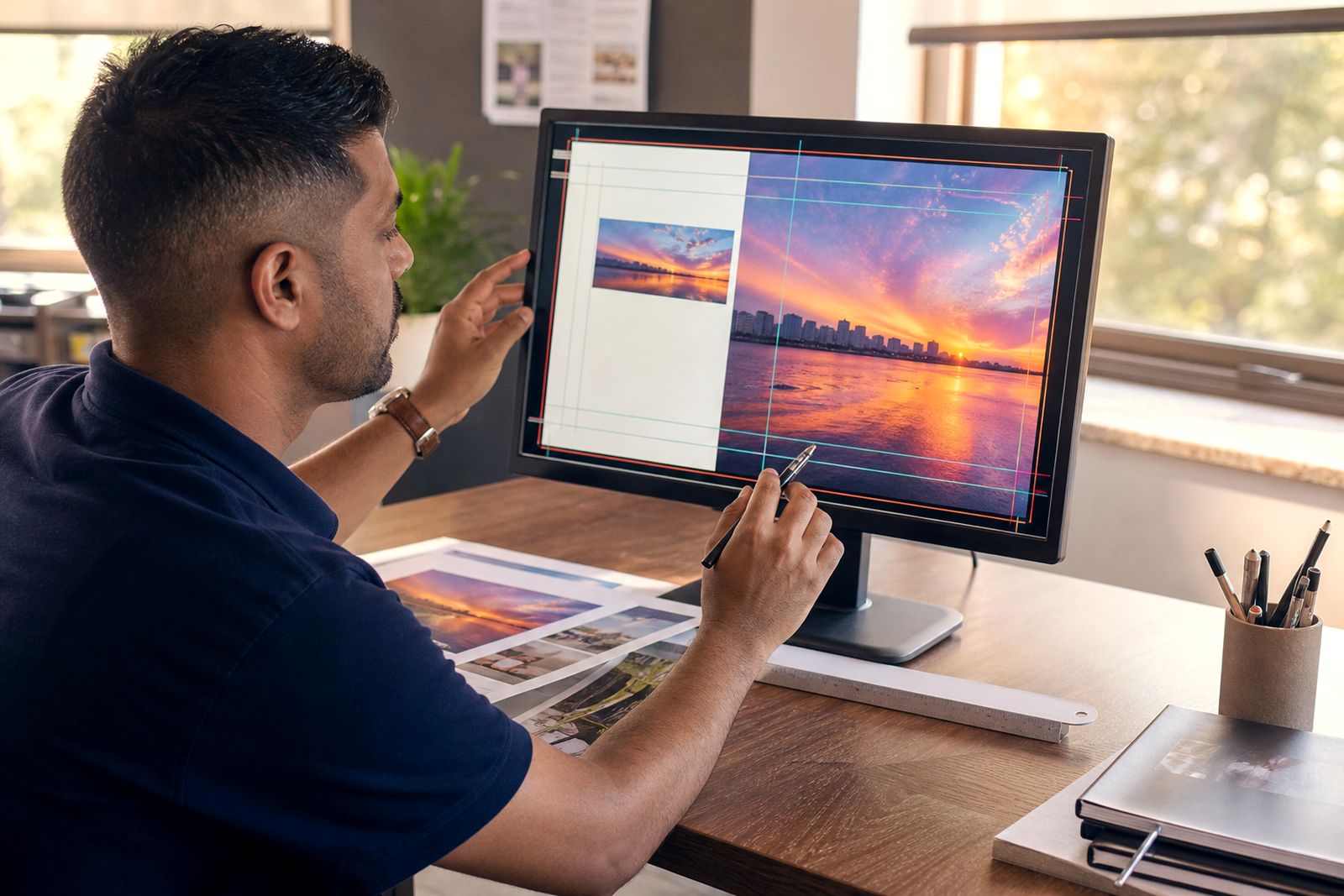
Many finishing problems begin long before the job reaches print. Files should be built with trim, bleed and safe areas in mind, especially for pieces that fold, bind or receive cover treatment. If an image runs across a fold or a spread, allow for the way paper moves and how panels meet after finishing. Tiny misalignments that look minor on screen can become obvious on a printed sheet.
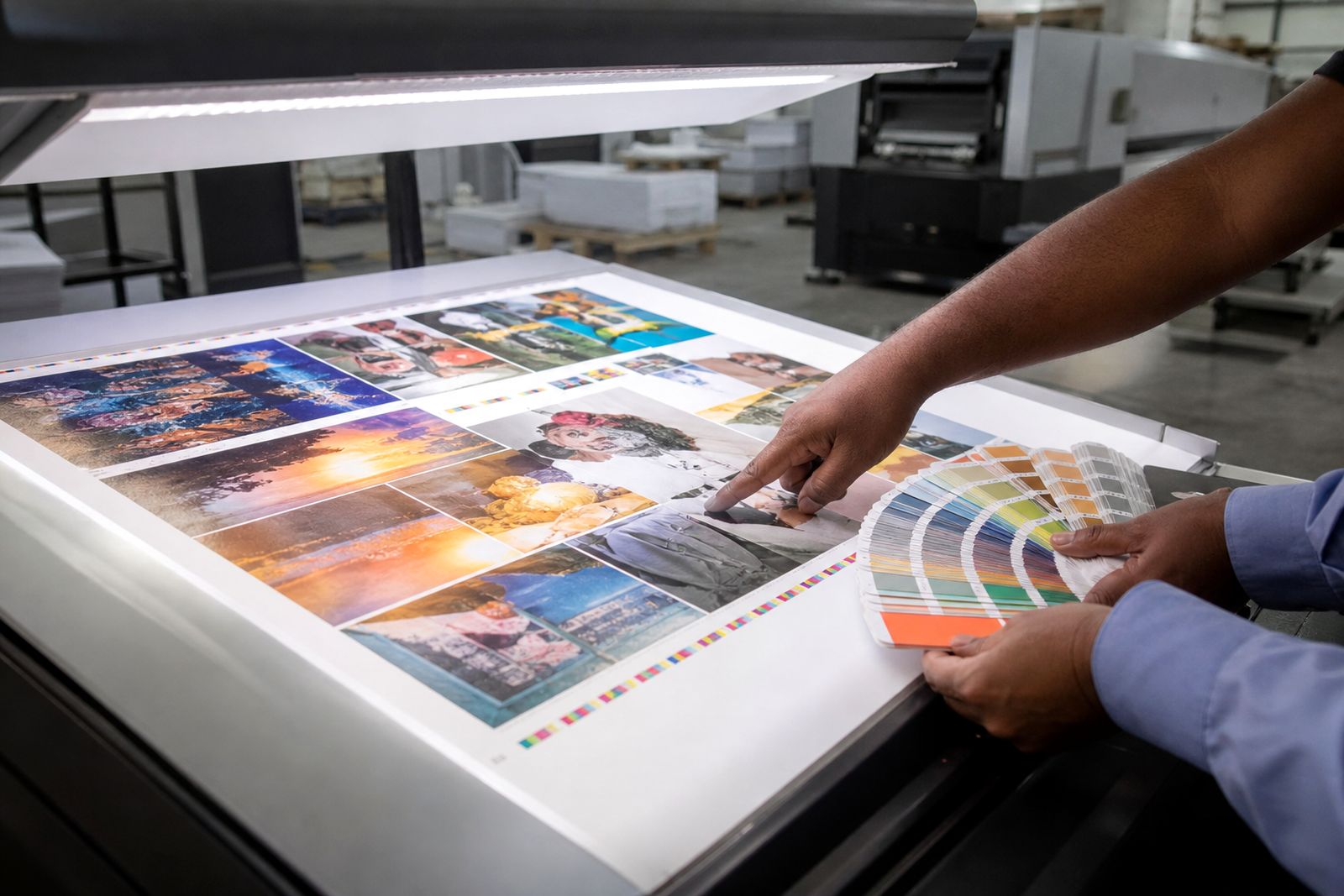
Proofing is also part of finishing planning. A proof helps check more than colour. It can confirm page order, heading positions, panel flow and whether key items are too close to trim or folds. For annual reports and other longer documents, work through one page type at a time: text pages, divider pages, cover, and any inserts. That steady approach catches issues early and keeps production moving.
- Confirm trim size, bleed and safe area before artwork is signed off.
- Mark folds clearly on working layouts and folded dummies.
- Check page order and spine text direction on bound work.
- Review dark solids, reverses and fine rules before approving proofs.
A simple finishing checklist before you order
When asking for a quotation or sending files, include the finishing details clearly. It speeds up estimating and reduces back and forth. State the final size, page count, paper choices if known, whether the cover needs varnish or laminate, the fold type if any, and the binding method. If the job will be couriered around KwaZulu-Natal or stored for a while before use, mention that too. Handling conditions matter more than people think.
If turnaround is tight, say which parts are essential and which are optional. Sometimes a small change in finish can help meet a deadline during busy periods or after power cuts affect schedules. The print team can then advise on a practical route without compromising the job unnecessarily.
- Final trimmed size.
- Flat size and folded size where relevant.
- Page count including cover.
- Preferred cover finish.
- Binding method.
- Delivery expectations and required date.
- Any insert, tab, pocket or special handling notes.
If you are unsure, use the website enquiry form and describe the job in plain terms. A clear brief early on usually leads to a cleaner result and less pressure at proof stage.
What our Commercial Printing customers say
Verified Google reviews
Questions we get asked
What is the main difference between varnish and laminate?
Varnish is a coating applied to the printed sheet, while laminate is a film applied over the surface. Laminate generally gives stronger protection against scuffing and handling.
Which binding works best for a company report?
It depends on page count and how the report will be used. Shorter reports often suit saddle stitching, while thicker reports may suit perfect binding for a neater spine and more formal presentation.
Do I need to decide finishing before sending artwork?
Yes, ideally. Folding, binding and cover finishes affect panel sizes, margins, spine width and file setup, so it is better to plan them before final artwork is approved.
Also worth a look
Ask for a quote
Send a note through the contact form with your print job, quantity, size, finish and delivery area, and the team will reply with a quote.
Open the contact form